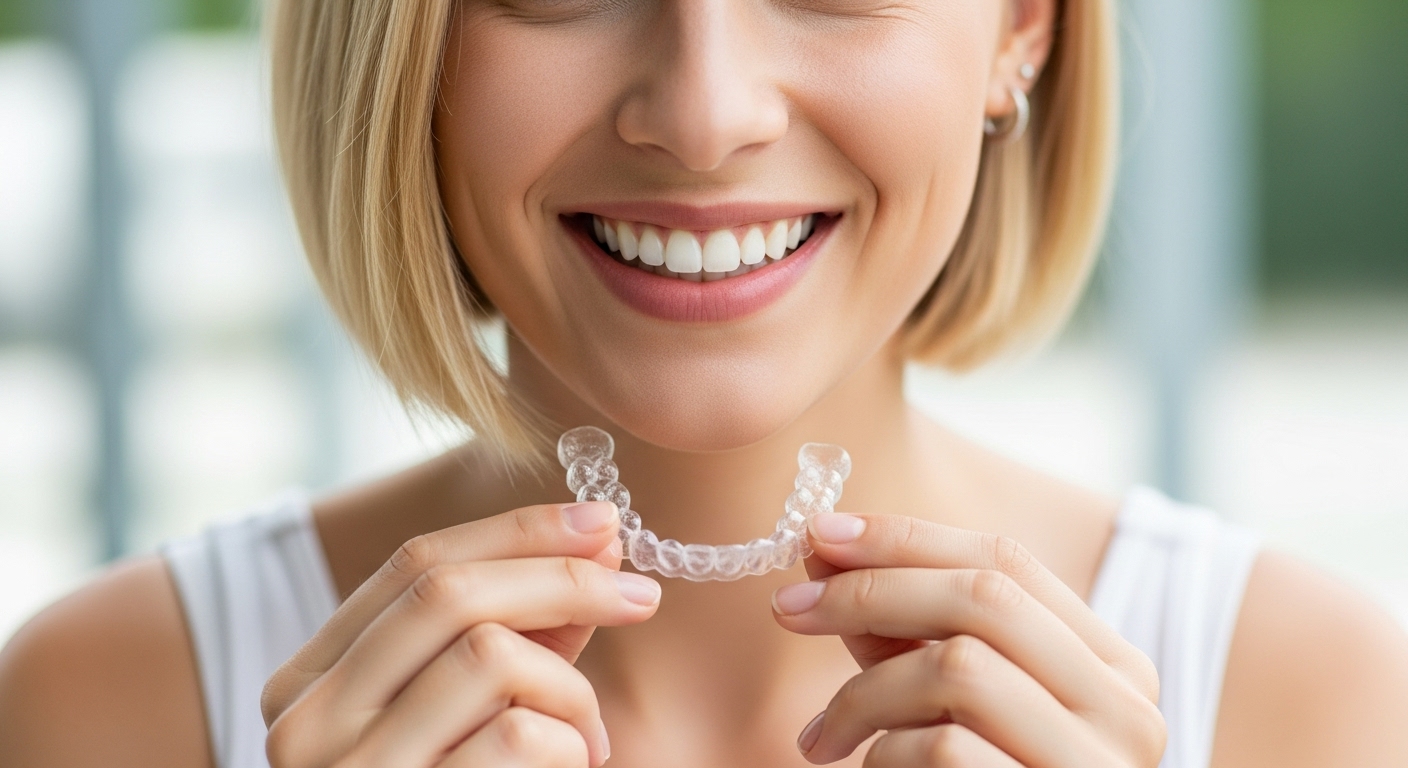
Teeth Straightening Options: Invisalign vs. Braces vs. Veneers
Straight teeth aren't just about looks—they're easier to clean, reduce wear, and can boost confidence. Traditional braces and Invisalign are two popular orthodontic treatments used to straighten teeth gradually. Both are FDA-approved devices that yield stunning results, so it can be hard to know which method is best.
Teeth Straightening Options
- • Invisalign: Clear, removable, 6-24 months, $3,000-$7,000
- • Metal braces: Most effective for complex cases, 12-24 months, $2,000-$6,000
- • Ceramic braces: Less visible than metal, similar timeline
- • Lingual braces: Hidden behind teeth, most discreet fixed option
- • Veneers: Instant results, but cosmetic only (doesn't move teeth)
Comparison Chart: All Options
| Treatment | Duration | Cost (US) | Visibility | Best For |
|---|---|---|---|---|
| Invisalign | 6-24 months | $3,000-$7,000 | Nearly invisible | Adults, teens wanting discretion |
| Metal Braces | 12-24 months | $2,000-$6,000 | Visible | Complex cases, all ages |
| Ceramic Braces | 12-24 months | $3,000-$7,000 | Less visible | Those wanting fixed but discreet |
| Lingual Braces | 12-24 months | $5,000-$13,000 | Hidden (behind teeth) | Professionals, complex cases |
| Veneers | 2-3 visits | $800-$2,500/tooth | N/A (cosmetic) | Minor cosmetic issues only |
Option 1: Invisalign (Clear Aligners)
Invisalign is one brand of clear aligners—custom-made mouthpieces molded from medical-grade plastic that apply pressure to teeth, guiding them to the desired position. Clear aligners are a discreet alternative to traditional metal braces.
Benefits of Invisalign
- Appearance: Nearly invisible—most people won't notice you're wearing them
- Comfort: Smooth plastic with no wires or brackets to irritate your mouth
- Removable: Take them out to eat, brush, and floss
- No food restrictions: Eat whatever you want
- Fewer visits: Typically every 6-8 weeks vs. monthly for braces
- Better oral hygiene: Easier to brush and floss without brackets
Drawbacks of Invisalign
- Requires discipline: Must wear 20-22 hours/day
- Must remove to eat: Can be inconvenient when dining out
- Not for all cases: Less effective for very complex corrections
- Attachments may be visible: Small bumps on teeth can be noticeable
- More brushing: Must brush after every meal before reinserting
Option 2: Traditional Metal Braces
Traditional braces use metal brackets bonded to teeth and connected by wires. They remain the gold standard for complex orthodontic cases.
Benefits of Braces
- Works for all cases: Minor, moderate, and complex corrections
- No compliance needed: They work 24/7 without your effort
- Multiple options: Metal, ceramic, or lingual (behind teeth)
- Can drink anything: No need to remove for beverages
- Often less expensive: Typically $2,000-$6,000
Drawbacks of Braces
- Visible: Metal brackets and wires are noticeable
- Mouth discomfort: Wires and brackets can irritate cheeks and lips
- Food restrictions: No hard, sticky, or chewy foods
- Frequent visits: Monthly adjustments required
- Harder to clean: Brushing and flossing around brackets is challenging
- Can leave stains: If oral hygiene is poor during treatment
Option 3: Ceramic Braces
Ceramic braces use clear or tooth-colored brackets instead of metal. They work the same way as traditional braces but are less noticeable.
- Pros: Less visible than metal, effective for complex cases
- Cons: More expensive than metal, brackets can stain, more fragile
- Timeline: 12-24 months (same as metal braces)
Option 4: Lingual Braces
Lingual braces are placed on the back (tongue side) of your teeth, making them completely hidden from view.
- Pros: Completely invisible, works for complex cases
- Cons: Most expensive option, can affect speech, harder to clean, more discomfort
- Timeline: 12-24 months
Option 5: Veneers (Cosmetic Only)
Veneers are thin porcelain shells bonded to the front of teeth. They can mask minor misalignment but don't actually move teeth.
- Pros: Instant results, also whitens and reshapes teeth
- Cons: Irreversible (removes enamel), doesn't fix bite issues, expensive per tooth
- Timeline: 2-3 appointments
- Best for: Minor cosmetic issues when orthodontics isn't desired
Which Option Is Right for You?
| If you want... | Choose... |
|---|---|
| Discreet, removable treatment | Invisalign |
| Complex case correction | Metal or lingual braces |
| Fixed but less visible | Ceramic braces |
| Completely hidden fixed option | Lingual braces |
| No compliance required | Any type of braces |
| No food restrictions | Invisalign |
| Instant cosmetic fix (minor issues) | Veneers |
| Most affordable option | Metal braces |
Factors to Consider
When choosing between Invisalign and braces, consider:
- Level of correction needed: Complex cases may require braces
- Age: Adults often prefer Invisalign; children may do better with braces
- Lifestyle: Active lifestyle, professional appearance needs
- Discipline: Can you commit to wearing aligners 22 hours/day?
- Budget: Braces are often less expensive
- Treatment time: Invisalign can be faster for minor cases
Teeth Straightening in Thailand
Getting orthodontic treatment in Thailand can save you 40-60% compared to Western prices:
- Invisalign: 80,000-150,000 THB ($2,200-$4,200 USD) vs. $3,000-$7,000 in the US
- Metal braces: 40,000-80,000 THB ($1,100-$2,200 USD)
- Ceramic braces: 50,000-100,000 THB ($1,400-$2,800 USD)
Phuket offers world-class dental clinics with English-speaking staff, modern equipment, and internationally trained orthodontists.
Frequently Asked Questions
Is Invisalign as effective as braces?
For most cases, yes. Modern Invisalign with attachments can treat the same conditions as braces. Very severe cases may still require traditional braces.
Which is faster: Invisalign or braces?
It depends on the case. Invisalign can be faster for minor corrections (6 months). For complex cases, braces and Invisalign have similar timelines (12-24 months).
Do I need retainers after treatment?
Yes, regardless of which option you choose. Retainers are essential to maintain your results after any orthodontic treatment.
The Bottom Line
The best teeth straightening option depends on your case complexity, lifestyle, and budget. For most adults seeking discreet treatment, Invisalign is excellent. For complex cases or those who struggle with compliance, braces remain the gold standard.
Key takeaways:
- Invisalign and braces both yield excellent results for most cases
- Invisalign offers discretion and convenience; braces offer reliability
- Cost is comparable ($3,000-$7,000 for Invisalign vs. $2,000-$6,000 for braces)
- Treatment in Thailand can save you 40-60%
- Consult with an orthodontist to determine the best option for your specific needs
Ready to Explore Your Options?
Find an experienced orthodontist in Phuket for a consultation.
Find a Dentist