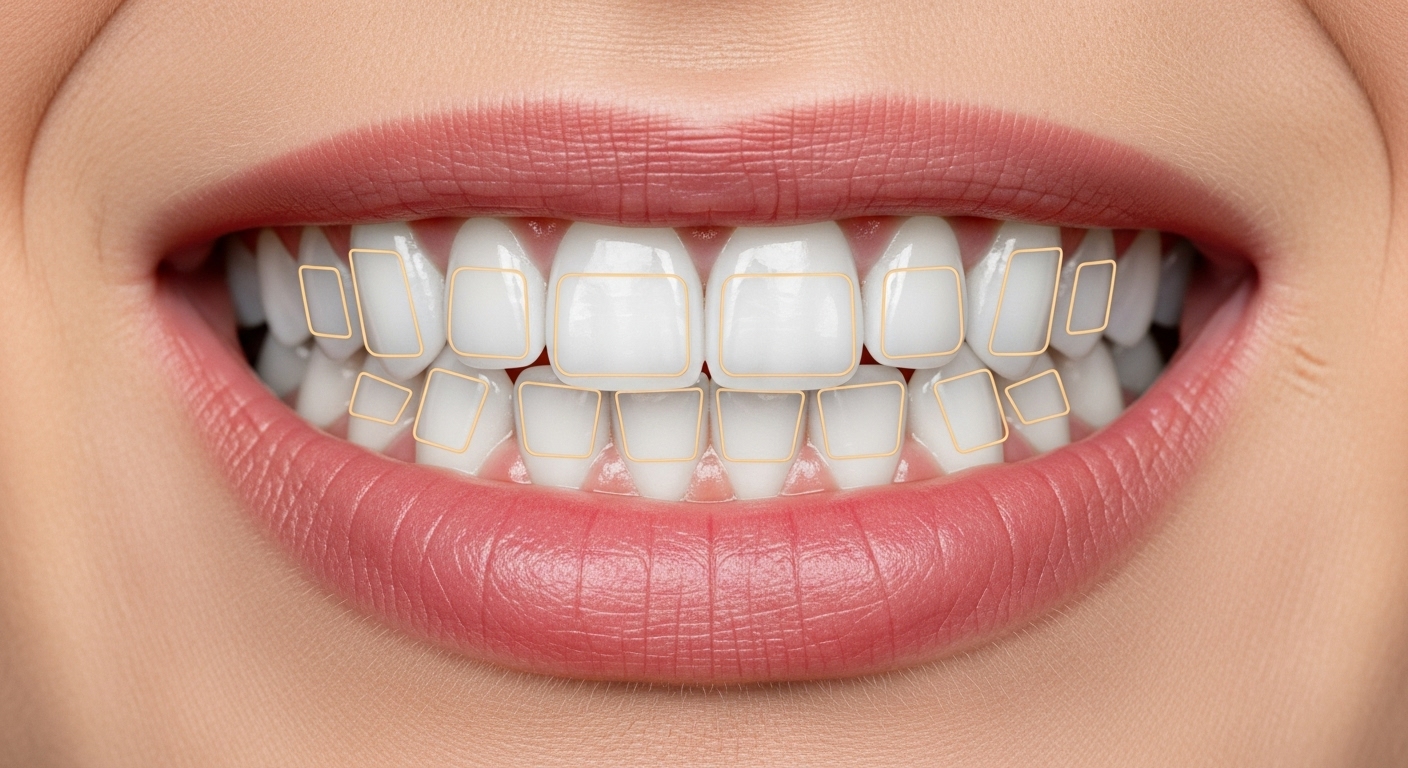
Invisalign Attachments (SmartForce): What They Are & How They Work
Invisalign SmartForce attachments (also called "buttons") are tiny, almost invisible bumps placed on your teeth during treatment. According to Invisalign, they work like handles, giving your clear aligners something to gently push on to help apply extra force where needed.
Key Facts About Attachments
- • Material: Tooth-colored dental composite resin
- • Shapes: Circular, rectangular, square, or triangular
- • Placement time: About 30 minutes
- • Pain: Painless procedure, mild discomfort after
- • Removal: Gently removed at end of treatment
- • Not everyone needs them: Depends on case complexity
What Are Invisalign Attachments?
Invisalign aligners are powerful, but sometimes they cannot accomplish certain alignment changes on their own due to the size, shape, or angle of a tooth. This is where attachments step in.
Invisalign attachments are tiny, tooth-colored buttons or bumps that are bonded to your teeth using dental composites. The buttons are placed at precise locations to give the aligners extra grip on the teeth as they move them into position.
Attachments are custom-made to fit your teeth and positioned to guide specific movements. They work like anchor points, giving your clear aligners something to gently push on to help your orthodontist apply extra force to areas where aligners need assistance.
How Do Invisalign Attachments Work?
Let's say you have a rotated tooth. It can be difficult for your aligner tray to apply the right amount of pressure to move the tooth into the correct position on its own. An Invisalign attachment essentially works as an anchor point to better direct the force of the aligner and help it move your teeth more effectively.
Attachments are generally placed in the middle of the tooth and allow your aligners to fit more securely. Since the attachments click into your aligners at designated spots, this can make your trays a little trickier to put in and take out—but you'll get used to it quickly.
Types of Attachments
Invisalign attachments come in various shapes, each designed for specific tooth movements:
- Rectangular: Most common, used for general tooth movement
- Circular: Often used for rotations
- Square: Used for specific force applications
- Triangular: Used for bite correction and extrusions
Your orthodontist will determine which type of attachment your teeth need to address your specific alignment issues, such as:
- Tooth rotation: Turning twisted teeth into proper alignment
- Intrusion: Pushing teeth up into the gum line
- Extrusion: Pulling teeth down that haven't fully erupted
- Bite correction: Adjusting how upper and lower teeth meet
Will You Need Attachments?
Only your orthodontist can say for sure. Generally, your orthodontist will recommend SmartForce attachments if one or more teeth need more significant movement.
The number of attachments needed varies depending on your specific case. You may need attachments on every tooth or just a couple needing additional support. Some patients don't need any attachments at all—if your case is less severe and only needs minor realignments, your aligners may be able to do all the work on their own.
Rest assured that if you do need attachments, they may not be necessary for the entirety of your treatment.
How Are Attachments Placed?
The process of applying SmartForce attachments is straightforward and takes about 30 minutes:
- Review treatment plan: Your orthodontist reviews your ClinCheck scan and notes where attachments will be placed
- Tooth preparation: Teeth are cleaned and dried for the bonding agent
- Template application: A template aligner with spaces for attachments is loaded with composite resin
- Placement: The template is placed over your teeth with gentle pressure
- Curing: A special UV light hardens the attachment material
- Template removal: The template is removed, leaving attachments bonded
- Cleanup: Any extra bonding agent or composite resin is removed
Are Attachments Noticeable?
SmartForce attachments are made from a tooth-colored material to be as discreet as possible. Your dentist will try to match the shade as closely as possible to your natural tooth color.
Some attachments may be more visible than others, depending on their location. For example, attachments on your front teeth may be easier to see than attachments on your molars.
But let's face it—Invisalign aligners and attachments are always going to be much more discreet than traditional metal braces. You can flash your smile with confidence throughout your entire treatment!
If you have concerns about visibility, talk to your orthodontist. They will do their best to place attachments in locations that minimize their visibility.
Downsides of Attachments
Attachments help make your treatment faster, more effective, and more predictable. But there are some considerations:
Tricky to Put In/Remove Aligners
Since attachments click into your aligners at specific spots, they can make putting in and taking out your trays more difficult. It takes a little practice to get it right.
Can Be Uncomfortable
Attachments don't sit smoothly on your teeth, so they may irritate the inside of your cheeks and lips when you're not wearing your aligners. Fortunately, when your aligners are in, they provide a smooth layer over the top.
Extra Care When Brushing
With attachments on your teeth, you'll have more areas where food can get stuck. You'll need to be extra careful when brushing and flossing to ensure you've thoroughly cleaned around your attachments.
Do Attachments Hurt?
The placement procedure is completely painless. You may experience some mild discomfort after initially getting your attachments—this is caused by your teeth needing time to adjust to the new pressure.
This discomfort should not last long and is completely normal—it's a sign that the treatment is working. In most cases, discomfort can be managed by over-the-counter pain relievers like ibuprofen.
Can Attachments Fall Off?
Yes, attachments can occasionally fall off. To prevent this:
- Avoid activities that put excessive pressure on teeth
- Don't use your teeth as tools
- Take good care of your teeth with regular brushing and flossing
- Follow your orthodontist's instructions for removing aligners safely
If an attachment does fall off, don't worry—simply contact your orthodontist. They will schedule a time to replace it quickly.
How Long Will You Wear Attachments?
The duration depends on your individual case. Attachments are typically kept on during your entire Invisalign treatment, which can last as little as six months or up to 18+ months for complex cases.
Your orthodontist will provide a more accurate estimate based on your specific needs and desired outcome.
What Happens When Attachments Are Removed?
At the end of your treatment, your orthodontist will remove your attachments in a painless, non-invasive procedure:
- Final check to confirm teeth have moved into desired positions
- Attachments are gently polished off
- New scan may be taken for fabricating retainers
- Instructions provided for caring for your new smile
Any staining that occurred on the attachments is removed along with them—your teeth will look clean and natural.
Frequently Asked Questions
Do attachments hurt?
The placement procedure is painless. You may feel mild discomfort for a day or two as your mouth adjusts, but this is easily managed with over-the-counter pain relievers.
What if an attachment falls off?
Contact your orthodontist. They can reattach it quickly. It's common and easily fixed—don't worry!
Can attachments stain?
They can pick up some staining from coffee, tea, or curry. Good oral hygiene minimizes this. Any staining is removed when attachments are polished off at the end of treatment.
Does everyone need attachments?
No. Simple cases may not require them. If you only need minor realignments, your aligners may work on their own. Your orthodontist will determine if attachments are needed based on your treatment plan.
Are attachments the same as buttons?
The terms are often used interchangeably, but technically: attachments are tooth-colored bumps bonded to teeth for aligner grip, while buttons are small metal or tooth-colored pieces used to attach rubber bands (elastics) for additional force.
Will attachments damage my teeth?
No. Attachments are bonded to the surface of your enamel and removed gently at the end of treatment. The procedure doesn't damage your teeth.
Attachments Make Treatment More Effective
SmartForce attachments are a key innovation in Invisalign treatment, enabling complex movements that aligners alone can't achieve. They allow experienced orthodontists to treat most cases with Invisalign that would typically require braces.
While attachments do make aligners slightly more visible and require extra care when brushing, they're still far more discreet than traditional braces. And they're completely removed at the end of treatment, leaving you with a beautiful, straight smile.
Questions About Invisalign?
Find an experienced Invisalign provider in Phuket for a consultation.
Find a Dentist