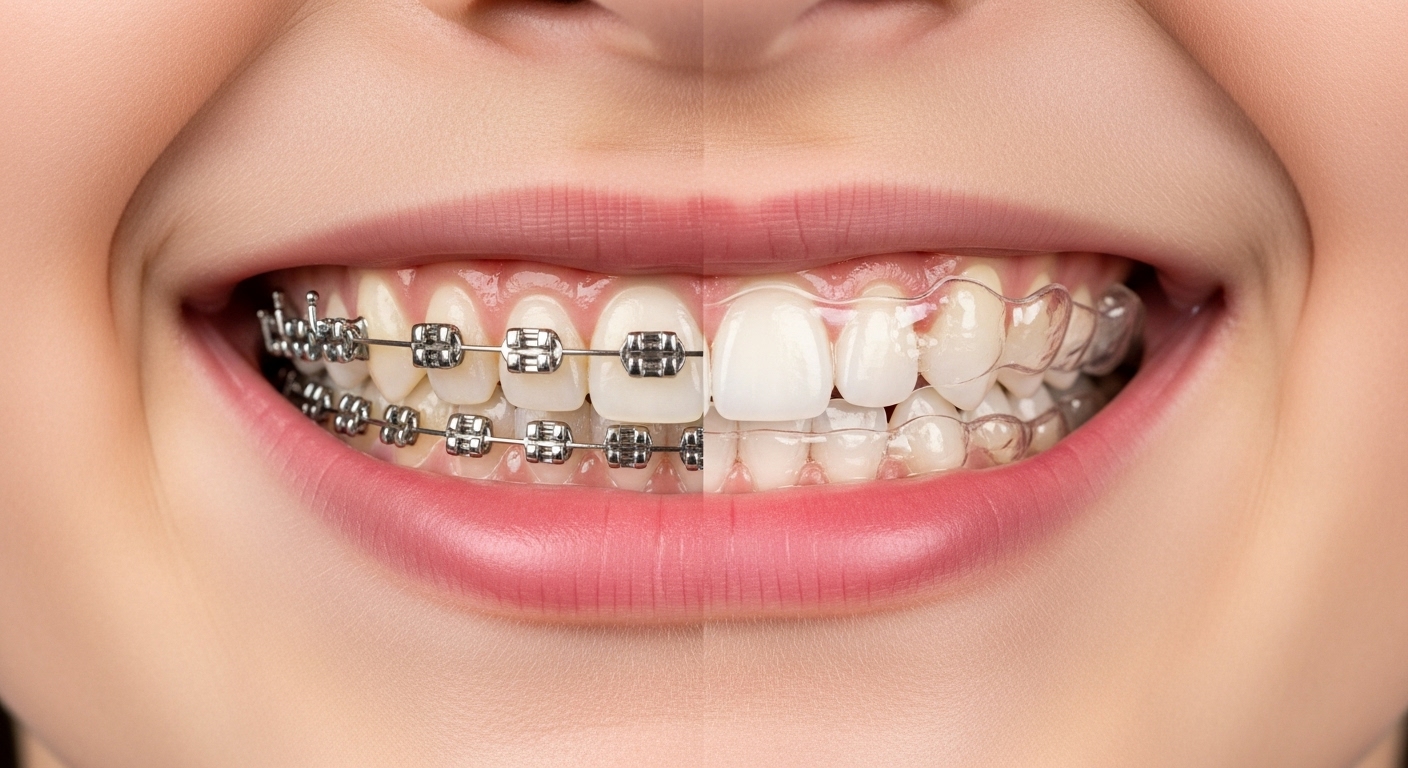
Invisalign vs Braces in Thailand: Complete Comparison Guide
Invisalign or braces? A 2022 randomized controlled trial published in PMC found that both treatments produce similar excellent results for mild to moderate cases. The real question is: which fits your lifestyle, budget, and treatment goals? Here's everything you need to know to make the right choice in Phuket.
Key Findings
- • Clinical outcomes: No significant difference in results (RCT study)
- • Treatment time: Braces ~4.8 months faster for simple cases
- • Invisalign: Nearly invisible, removable, no food restrictions
- • Braces: Better for complex cases, no compliance needed
- • Cost in Thailand: Both 40-60% cheaper than Western countries
What Does the Science Say?
A 2022 randomized controlled trial comparing Invisalign with SmartForce features to traditional braces found:
- Same results: For simple Class I malocclusions, aligners produce the same excellent occlusal results as traditional braces
- Braces slightly faster: Patients with simple malocclusions require 4.8 months longer treatment with aligners
- Stable outcomes: No differences in results 6 months post-treatment
Another 2024 comparative analysis confirmed that clear aligners and traditional braces are equally effective for mild to moderate malocclusion patients.
Invisalign: The Advantages
Invisalign uses custom-made clear aligners that are virtually invisible. Here's why many patients prefer them:
Nearly Invisible Appearance
The biggest benefit is aesthetics. Adult patients appreciate that colleagues and clients can't see they're undergoing orthodontic treatment. You won't worry about your smile in photos—all you'll see is your ever-improving smile.
Removable for Eating
Aligners must be worn 20-22 hours daily, but you can remove them when eating. This means no food restrictions—enjoy Thai cuisine in Phuket without worrying about damaging brackets!
Easier Oral Hygiene
Remove your aligners to brush and floss normally. With braces, cleaning around brackets and wires is challenging and time-consuming.
Fewer Appointments
Much of the orthodontist's work happens before treatment. A 3D scan creates all your customized aligners at once. Visits are kept to a minimum—ideal for dental tourists who can't return frequently.
More Comfortable
While both treatments cause some discomfort, Invisalign's smooth plastic doesn't cut cheeks or lips like metal brackets can.
Invisalign: The Disadvantages
Requires Discipline
The #1 reason for Invisalign failure is lack of patient compliance. If you won't wear aligners 22 hours daily, results suffer. Braces work 24/7 regardless of compliance.
Inconvenient Removal
Aligners must be removed before eating or drinking anything except water. In public, you need to remove them discreetly, brush your teeth, then replace them. Food particles can stain aligners and increase cavity risk.
Not Ideal for Complex Cases
Invisalign isn't always the best option for severe malocclusions. Some cases may require finishing with braces, adding cost.
Attachments May Be Needed
Some patients need attachments—small tooth-colored bumps that help aligners grip teeth. While discreet, they can make aligners look more like clear braces.
Braces: The Advantages
Suitable for All Cases
Braces can fix any orthodontic issue, no matter how complex. They use anchors and archwires to exert more force than aligners, making them the most powerful treatment method.
Better Results for Complex Cases
Braces can achieve results that Invisalign cannot. They have more force to move teeth into precise positions, especially for severe crowding, rotations, or bite issues.
Multiple Types Available
Modern braces aren't just metal:
- Metal braces: Most affordable, most effective for complex cases
- Ceramic braces: Tooth-colored brackets, less visible
- Lingual braces: Placed behind teeth, completely invisible from front
- Damon braces: Self-ligating system, potentially faster treatment
Faster Treatment Time
For closing gaps and aligning teeth, braces are generally faster. The RCT study showed braces finish treatment 4.8 months earlier than Invisalign for simple cases.
No Compliance Required
Braces work 24/7. You can't forget to wear them or lose them. This makes them ideal for teens or anyone who struggles with discipline.
Braces: The Disadvantages
Visible Appearance
Metal brackets and wires are noticeable. While ceramic and lingual options exist, they're more expensive.
Difficult Oral Hygiene
Brushing and flossing around brackets is challenging. Special tools like interdental brushes and floss threaders are needed.
Food Restrictions
Hard, sticky, and crunchy foods can damage brackets. You'll need to avoid popcorn, nuts, hard candy, and chewy sweets.
More Frequent Appointments
Braces require regular adjustments every 4-6 weeks. This can be challenging for dental tourists.
Complete Comparison Table
| Factor | Invisalign | Metal Braces | Ceramic Braces |
|---|---|---|---|
| Visibility | Nearly invisible | Very visible | Semi-visible |
| Cost in Thailand | $3,000-$5,000 | $1,400-$1,900 | $1,700-$2,400 |
| Treatment time | 12-18 months | 12-24 months | 12-24 months |
| Removable | Yes | No | No |
| Food restrictions | None | Many | Many |
| Compliance needed | High (22 hrs/day) | None | None |
| Complex cases | Limited | Excellent | Excellent |
| Comfort | More comfortable | Can irritate | Can irritate |
| Appointments | Every 6-8 weeks | Every 4-6 weeks | Every 4-6 weeks |
Cost Comparison in Thailand
Both Invisalign and braces are significantly cheaper in Thailand than in Western countries. Here's what you can expect in Phuket:
| Treatment | Thailand (THB) | Thailand (USD) | USA (USD) |
|---|---|---|---|
| Metal Braces | ฿50,000-฿65,000 | $1,400-$1,900 | $3,000-$7,000 |
| Ceramic Braces | ฿60,000-฿85,000 | $1,700-$2,400 | $4,000-$8,000 |
| Damon Braces | ฿70,000-฿90,000 | $2,000-$2,600 | $4,000-$8,000 |
| Invisalign | ฿110,000-฿180,000 | $3,100-$5,100 | $3,000-$8,000 |
| Lingual Braces | ฿150,000-฿180,000 | $4,300-$5,100 | $8,000-$10,000 |
*Prices from Urban Beauty Thailand and local Phuket clinics, 2024-2025.
Considerations for Dental Tourists
If you're traveling to Phuket for orthodontic treatment, consider these factors:
Invisalign May Be Better for Tourists
- Fewer visits required: Get scans and aligners, then continue at home
- Remote monitoring available: Many Thai clinics offer virtual check-ins
- Can coordinate with home orthodontist: Invisalign is a global system
Braces Require More Planning
- Regular adjustments needed: Every 4-6 weeks
- Emergency repairs: Broken brackets need immediate attention
- Consider extended stays: Some patients stay in Thailand for full treatment
Frequently Asked Questions
Is Invisalign faster than braces?
Not necessarily. A randomized controlled trial found braces finish treatment about 4.8 months faster for simple cases. However, for mild to moderate cases, treatment times are similar (12-18 months). See our complete timeline guide.
Is Invisalign as effective as braces?
For mild to moderate cases, yes—clinical studies show no significant difference in outcomes. For complex cases (severe crowding, rotations, bite issues), braces may achieve better results.
Which is more painful: Invisalign or braces?
Both cause discomfort when teeth move. However, Invisalign is generally considered less painful because there are no metal brackets to irritate cheeks and lips. Learn more about managing Invisalign discomfort.
Can I switch from braces to Invisalign?
Yes, some patients start with braces for complex movements, then switch to Invisalign for finishing. Discuss this option with your orthodontist.
Which is better for adults?
Most adults prefer Invisalign for its discreet appearance. However, braces may be better if you have a complex case or struggle with compliance. See our guide on Invisalign for adults.
Do I need to wear a retainer after treatment?
Yes, regardless of whether you choose Invisalign or braces. Retainers are essential to maintain your results.
Making Your Decision
Choose Invisalign if:
- Aesthetics are important to you
- You want no food restrictions
- You can commit to wearing aligners 22 hours/day
- You have a mild to moderate case
- You're a dental tourist who can't return frequently
Choose braces if:
- You have a complex orthodontic case
- You want the most affordable option
- You don't trust yourself to wear aligners consistently
- You want the fastest possible treatment
- You can attend regular appointments
The best choice depends on your individual case, lifestyle, and goals. An experienced orthodontist in Phuket can evaluate your teeth and recommend the most effective treatment for your situation.
Get a Free Consultation
Find a qualified orthodontist in Phuket to discuss your options.
Find a Dentist