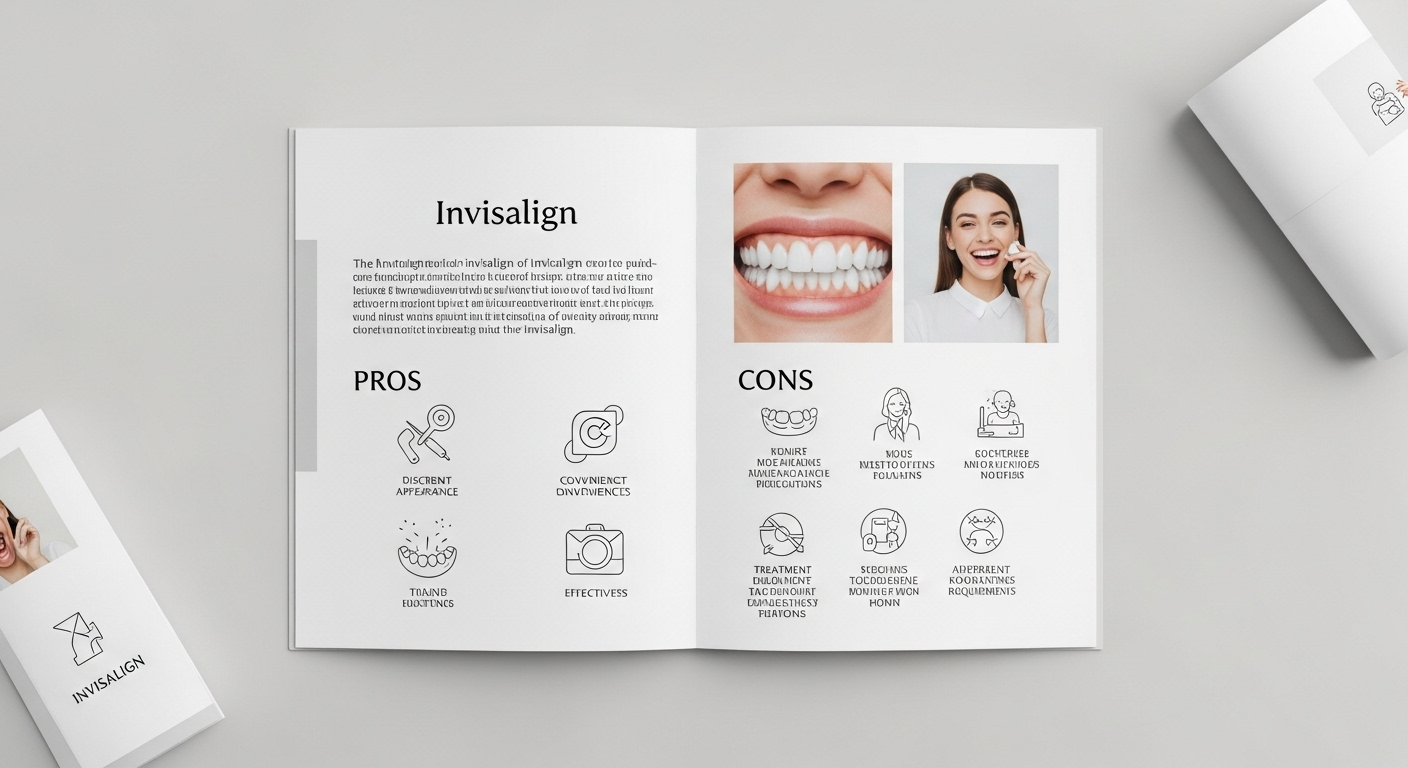
Invisalign Pros and Cons: An Honest Review
Is Invisalign worth it? For most patients, yes—but it's not for everyone. According to Healthline, there are several important pros and cons to consider before deciding if clear aligners are right for you.
Quick Summary
- • Best for: Adults and teens who value discretion and can commit to 22 hours/day
- • Not ideal for: Those who can't commit to compliance or have very complex cases
- • Main advantage: Nearly invisible, removable, more comfortable
- • Main disadvantage: Requires discipline—must wear 22 hours/day
Pros vs. Cons at a Glance
| ✅ Pros | ❌ Cons |
|---|---|
| Nearly invisible—much less noticeable than braces | Requires 22 hours/day discipline |
| Removable for eating and cleaning | Must remove for every meal and drink |
| No food restrictions | Attachments may be visible |
| More comfortable—no wires or brackets | New aligners can cause temporary discomfort |
| Easier to brush and floss | Must brush after every meal before reinserting |
| Fewer emergency visits (no broken wires) | Less effective for very complex cases |
| 3D treatment preview before starting | Can be expensive ($3,000-$8,000) |
| Better periodontal health during treatment | Lifelong retainer wear required |
The Pros of Invisalign
1. Nearly Invisible
This is the most commonly cited reason for choosing Invisalign. The clear aligners are much less noticeable than the wires and brackets of braces. Most people won't even know you're wearing them, which means you can smile confidently throughout treatment.
2. Removable
You can physically remove the aligner from your mouth when you need to. This makes eating, brushing, and flossing much easier than with traditional braces.
3. Easier Oral Hygiene
By removing the aligner, you can easily brush and floss your teeth without having to work around wires and brackets. A 2017 study suggests this can improve your periodontal health by reducing the amount of bacteria around your teeth and gums.
4. More Comfortable
Since there are no wires or brackets, you don't have to worry about painful nicks or cuts in your mouth. The aligners are smooth and won't irritate your cheeks or lips. Discomfort is generally mild and temporary.
5. Fewer Emergency Visits
Many people with traditional braces have stories about a bracket that fell off or a wire that broke, leading to an emergency visit to the orthodontist. You won't have that potential problem with clear aligners.
6. No Food Restrictions
Unlike braces, you can eat anything you want—just remove your aligners first. No need to avoid popcorn, apples, or sticky foods.
7. Minimal Maintenance
Invisalign aligners require minimal maintenance. Clean them with a soft toothbrush and clear soap, and they'll stay fresh throughout your treatment.
The Cons of Invisalign
1. Requires Compliance (22 Hours/Day)
To get the maximum benefit from Invisalign, you must wear the aligners for 20 to 22 hours a day. If you think you'll be tempted to slip them out more often, it may not be the best choice for you.
About 1 in 20 Invisalign patients end up switching to braces because they couldn't maintain the required wear time.
2. Must Remove for Eating and Drinking
When you're eating or drinking anything except water, you need to take the aligners out. If you don't, food or drink can get trapped, causing bacteria to grow and potentially leading to cavities. Liquid can also seep in and stain the aligners.
This can be inconvenient, especially when dining out—you'll need to excuse yourself to remove aligners and brush after eating.
3. Attachments Make Them More Visible
More and more Invisalign treatments require attachments—small tooth-colored bumps bonded to your teeth. These attachments make Invisalign more noticeable, somewhat reducing the "invisible" advantage.
4. New Aligners Can Be Uncomfortable
Getting new aligner trays can be uncomfortable and even painful as your teeth adjust. Although orthodontists call it "pressure," it can be uncomfortable for the first few days of each new tray.
5. Less Effective for Complex Cases
Research suggests Invisalign is more effective for people whose teeth require only certain kinds of movement. Your doctor may suggest another treatment option for more complex issues. Additionally, if you have bridgework on some teeth, Invisalign might not be the right option.
6. Can Be Expensive
Invisalign typically costs $3,000 to $8,000 in the US. However, in Thailand, you can get the same treatment for 40-60% less, making dental tourism an attractive option.
7. Lifelong Retention Required
After treatment, you'll need to wear retainers for life to maintain your results. This is true for any orthodontic treatment, not just Invisalign.
Who Should Choose Invisalign?
Invisalign is ideal for:
- Adults and teens who value discretion in their orthodontic treatment
- Professionals who can't have visible braces at work
- Disciplined patients who can commit to 22 hours/day wear time
- Those with mild to moderate crowding, gaps, or bite issues
Invisalign may not be ideal for:
- Patients who can't commit to wearing aligners 22 hours/day
- Very complex orthodontic cases
- Patients with bridgework or certain dental restorations
- Young children (though Invisalign First is available for kids 6-10)
Frequently Asked Questions
Is Invisalign worth the money?
For most patients, yes. The discretion, comfort, and convenience justify the cost—especially for adults who value aesthetics. In Thailand, the lower cost makes it even more worthwhile.
What's the biggest disadvantage of Invisalign?
The 22-hour wear requirement. If you don't wear aligners consistently, treatment takes longer and results suffer. This requires discipline that not everyone can maintain.
Is Invisalign as effective as braces?
For most cases, yes. Modern Invisalign with attachments can treat the same conditions as braces. Very severe cases may still need traditional braces.
Does Invisalign hurt?
You'll experience pressure and mild discomfort, especially when starting new aligners. However, it's generally less painful than traditional braces.
Can I drink coffee with Invisalign?
You should remove aligners before drinking coffee or any beverage except water. Hot drinks can warp the plastic, and coffee will stain the aligners.
Is Invisalign Right for You?
Invisalign is excellent for disciplined patients who value discretion. If you can commit to wearing aligners 22 hours a day, the benefits typically outweigh the drawbacks.
Key questions to ask yourself:
- Can I commit to wearing aligners 22 hours/day?
- Am I willing to remove aligners for every meal and brush before reinserting?
- Is the aesthetic advantage important to me?
- Is my case suitable for Invisalign?
Have an honest conversation with your orthodontist about your lifestyle and goals. They can help you determine if Invisalign is the right choice for your specific situation.
Ready to Discuss Your Options?
Find an experienced Invisalign provider in Phuket for a personalized consultation.
Find a Dentist